Where we come from

Massawa and the Red Sea coast

The port, the water and the islands off it, and the road up to Asmara. This is where home is, when someone asks.

Where it is

On the Red Sea, across from Arabia

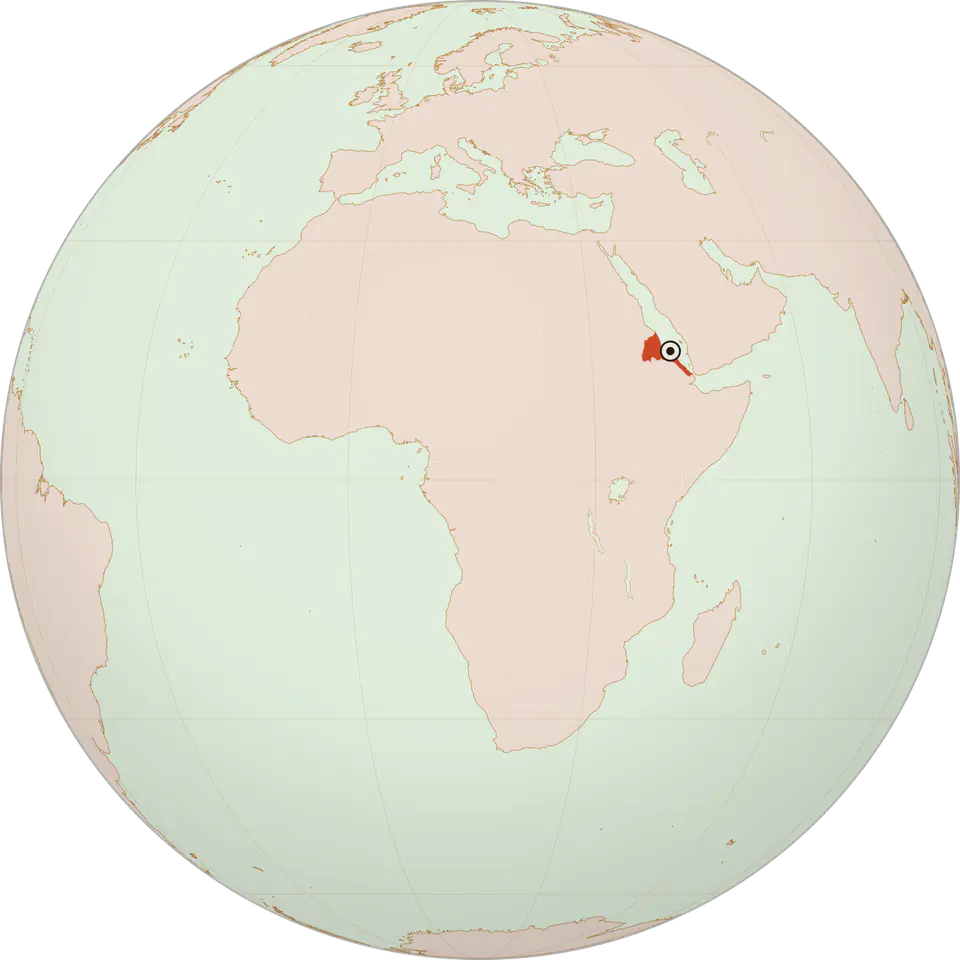
Africa on a globe, with the Horn of Africa marked and dots for Massawa and Addis Ababa
Eritrea, on the Red Sea, with Ethiopia and Somalia. The dots are Massawa and Addis Ababa. Map: Martin23230, Rei-artur and Sémhur, CC BY-SA 3.0, via Wikimedia Commons, recoloured. The interactive globe is drawn live from Natural Earth data, public domain.

Eritrea is the long thin country on the western shore of the Red Sea, where Africa comes closest to Arabia, with Sudan behind it and Ethiopia below. Massawa is its port, about halfway down that coast. Older than any kingdom, the lowland between the port and the highlands is one of the places humanity began: a skull about a million years old was found at Buya, and Lucy, two million years older still, across the border in the Afar. Everyone alive has family who walked out of this part of the world at some point, so when we say welcome to the family we mean it fairly literally.

The coast

Massawa, the pearl of the Red Sea

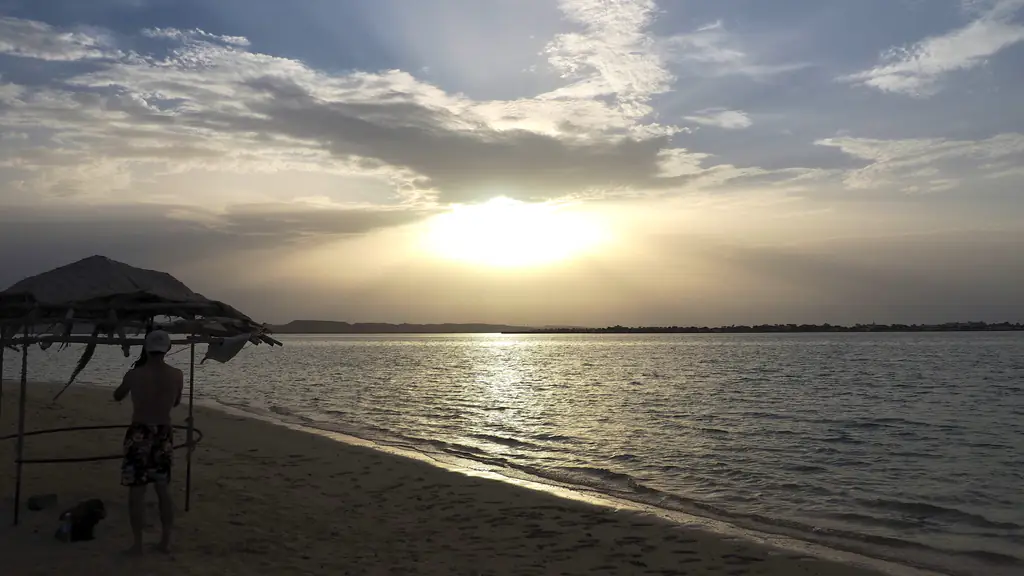
Massawa is where our family is from. It sits on two small islands at the edge of the Red Sea, built from the coral it stands on, and by noon the stone is too hot to lean against. Nobody goes out. Then the light softens, the shutters open, and the town walks down to the water. Fishermen haul their boats up the sand. Children go in fully dressed. Old men set out chairs on the causeway to watch the sun go down behind the mountains, over water that is still warm at midnight. Out past the harbour the Dahlak islands lie flat on the horizon, a hundred of them, and beyond them Arabia. This is what the family talks about when the restaurant is quiet: that hour on the waterfront, and the smell of fish cooking somewhere down the lane.
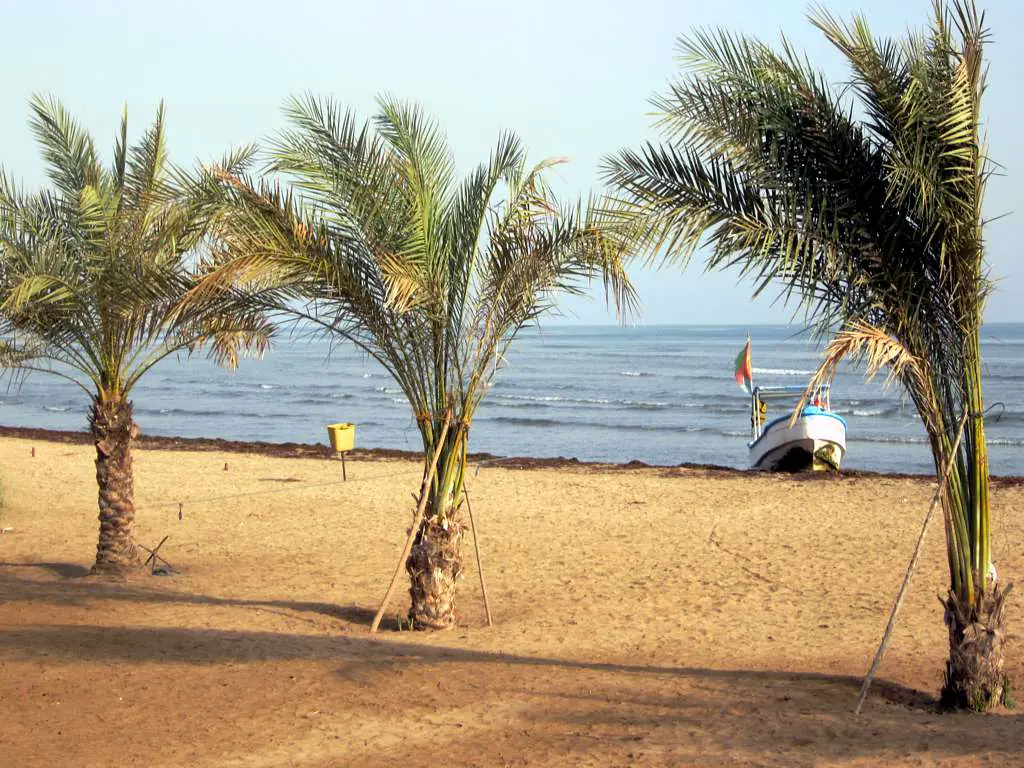
Palm trees leaning over a quiet sandy beach at Gurgussum, north of Massawa, with the Red Sea flat and blue behind
Gurgussum beach, north of town. Yemen is straight across the water. Photo: David Stanley, CC BY 2.0, via Wikimedia Commons.
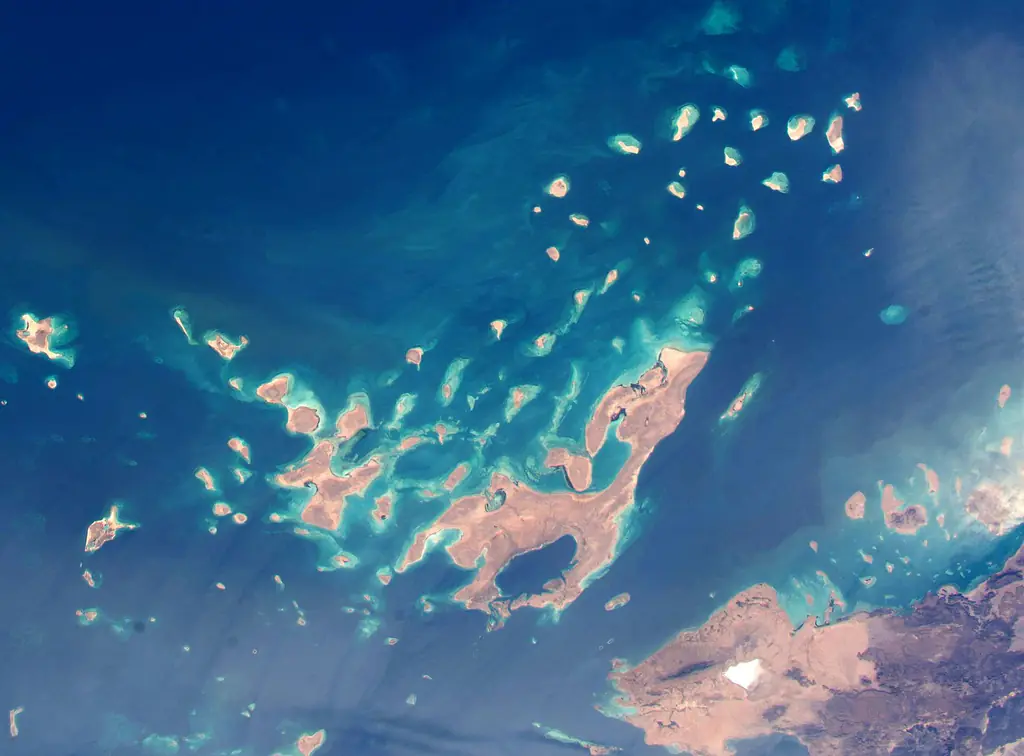
The Dahlak islands seen from orbit, dozens of sandy islands ringed with pale turquoise reef in dark blue sea
The Dahlak islands from orbit. NASA, public domain.
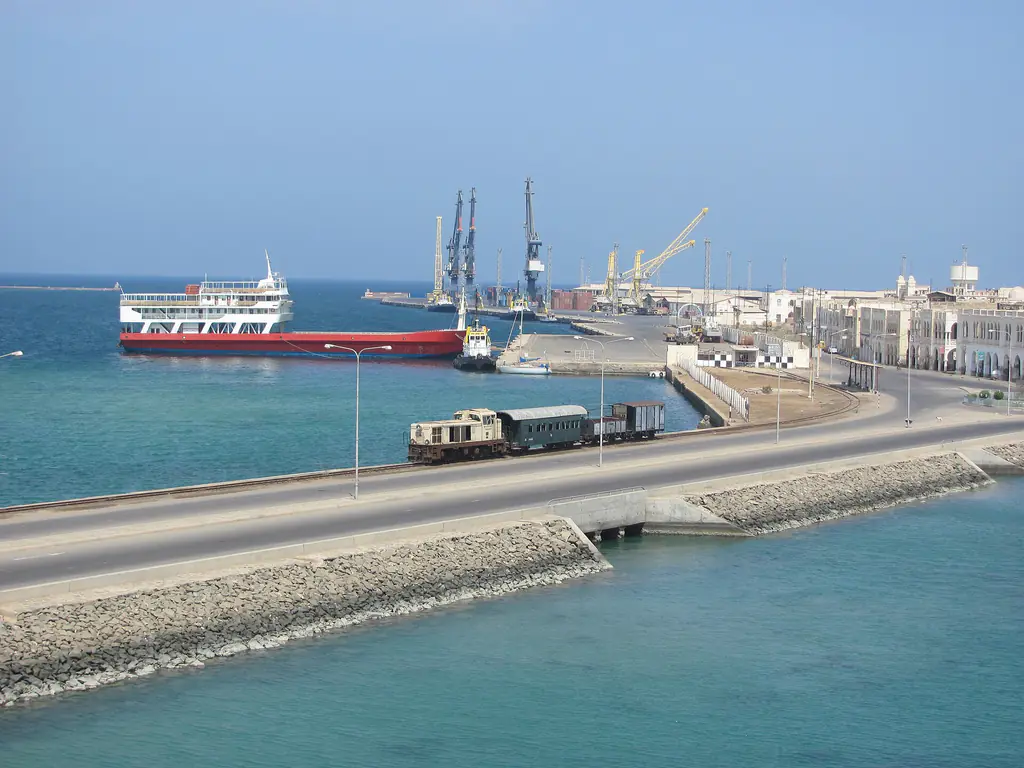
Massawa harbour: turquoise water, a ship at the wharf, cranes, and the little railway running along the causeway
The harbour, with the railway on the causeway. Photo: Reinhard Dietrich, CC0, via Wikimedia Commons.

It has been a trading port for as long as there has been trade on that sea. Adulis, the harbour that Aksum used to send its ivory and gold out to Rome and bring pepper and cardamom in from India, is just down the coast, and for centuries after that the dhows came across from Yemen and Arabia on the monsoon wind with cloth, dates and spices, and went back with pearls, hides and coffee from the highlands. A lot of what is in our berbere first came ashore on that waterfront, and the old spice merchants' houses are there.

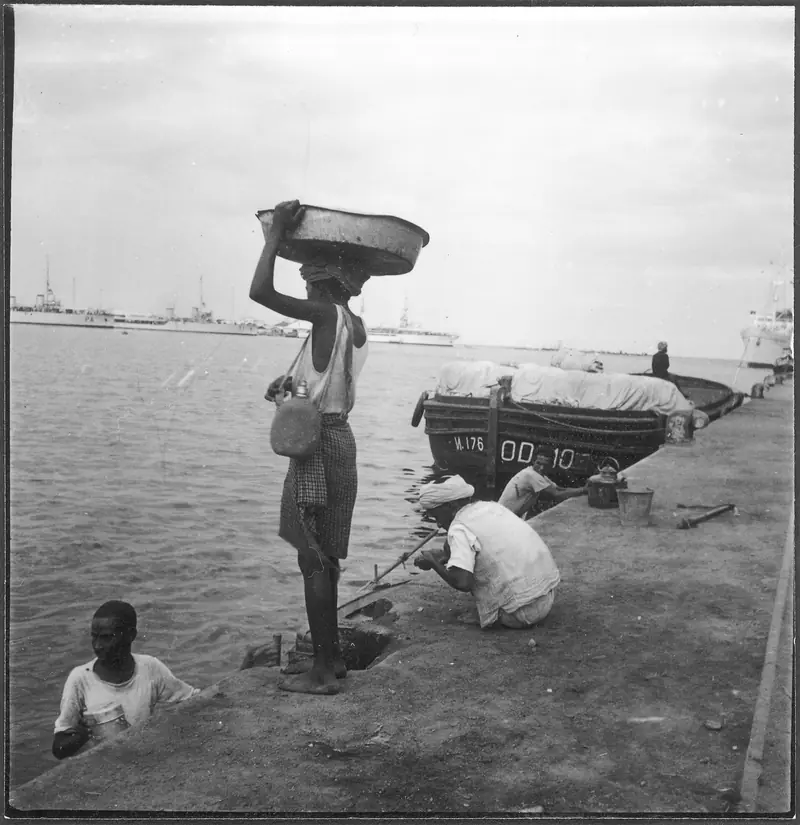
Porters on the quay at Massawa in 1939, one carrying a basin on his head, with a loaded boat and ships behind
The quay, 1939. Annemarie Schwarzenbach, Swiss National Library, public domain.
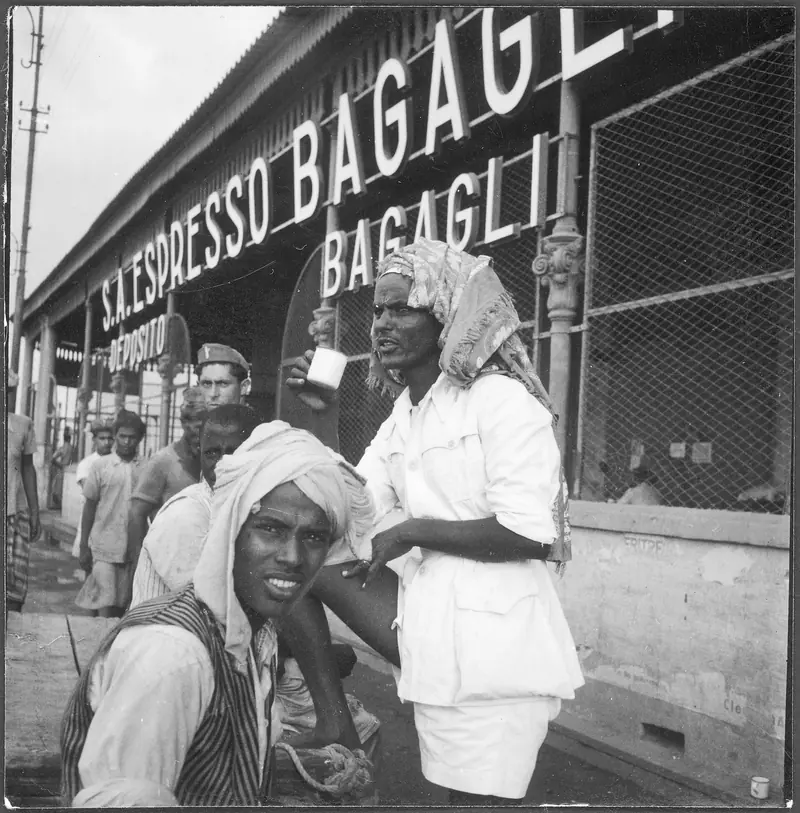
A tea seller in a turban lifting a small cup outside the baggage office on the Massawa waterfront in 1939, with a smiling customer in front
Tea on the waterfront, 1939. Annemarie Schwarzenbach, Swiss National Library, public domain.

The old quarter sits on two small islands joined to the mainland by causeways, and it is built of coral stone, with carved wooden balconies, arched arcades and shaded lanes that the Ottomans started in the 1500s and the Egyptians and Italians added to. The Sheikh Hanafi mosque has been there since the fifteenth century and the churches are a short walk from it. It is one of the hottest towns on earth, so life happens after dark, in the lanes and on the water.
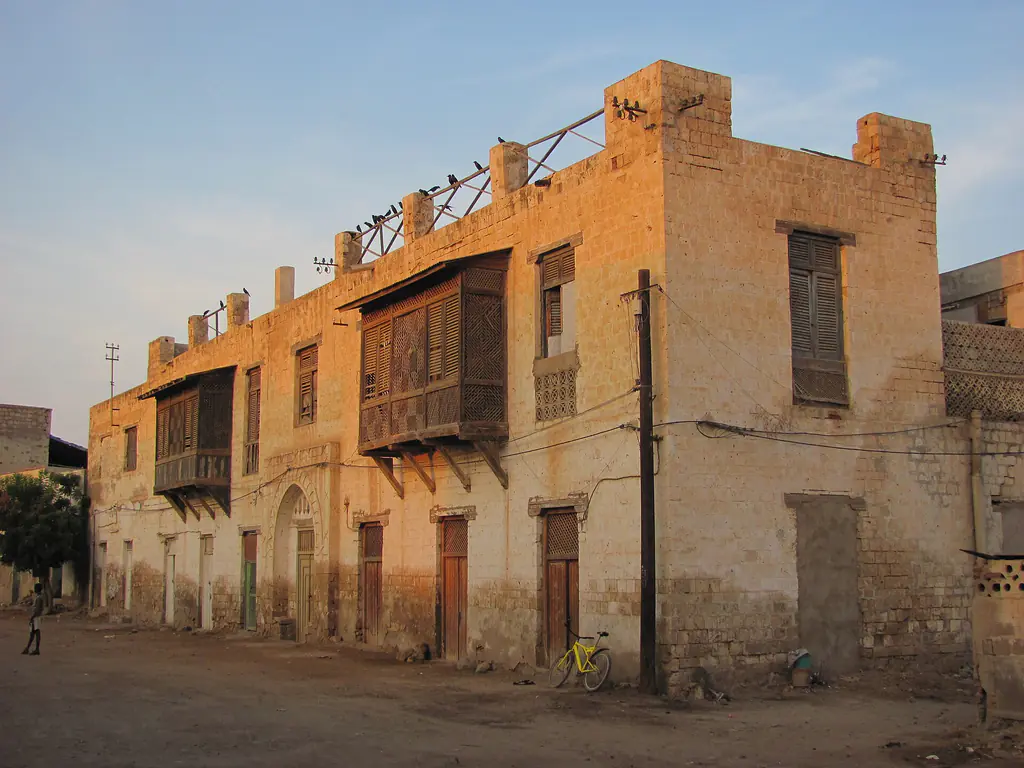
Carved wooden balconies on a coral-stone house in Massawa's old town, glowing in low evening sun, with a yellow bicycle leaning on the wall
The balconies at sunset. Photo: Reinhard Dietrich, CC0, via Wikimedia Commons.
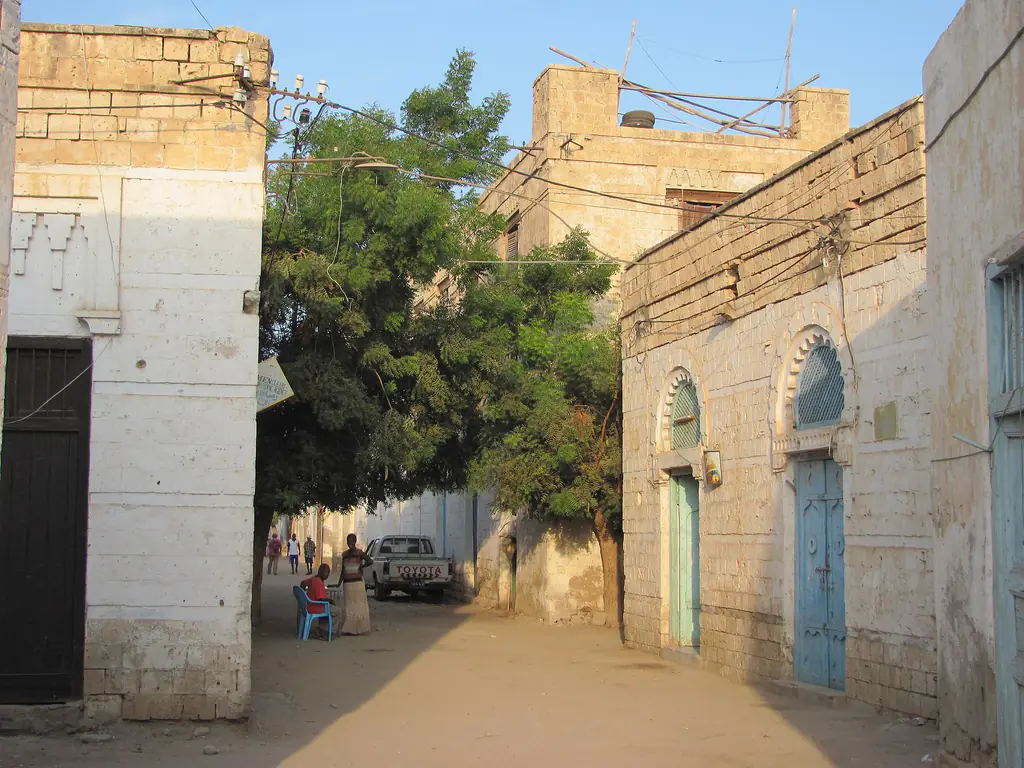
A sandy lane in Massawa's old town in evening light, with blue doors, a big tree and neighbours sitting outside
Evening in the old town, when the day starts. Photo: Reinhard Dietrich, CC0, via Wikimedia Commons.
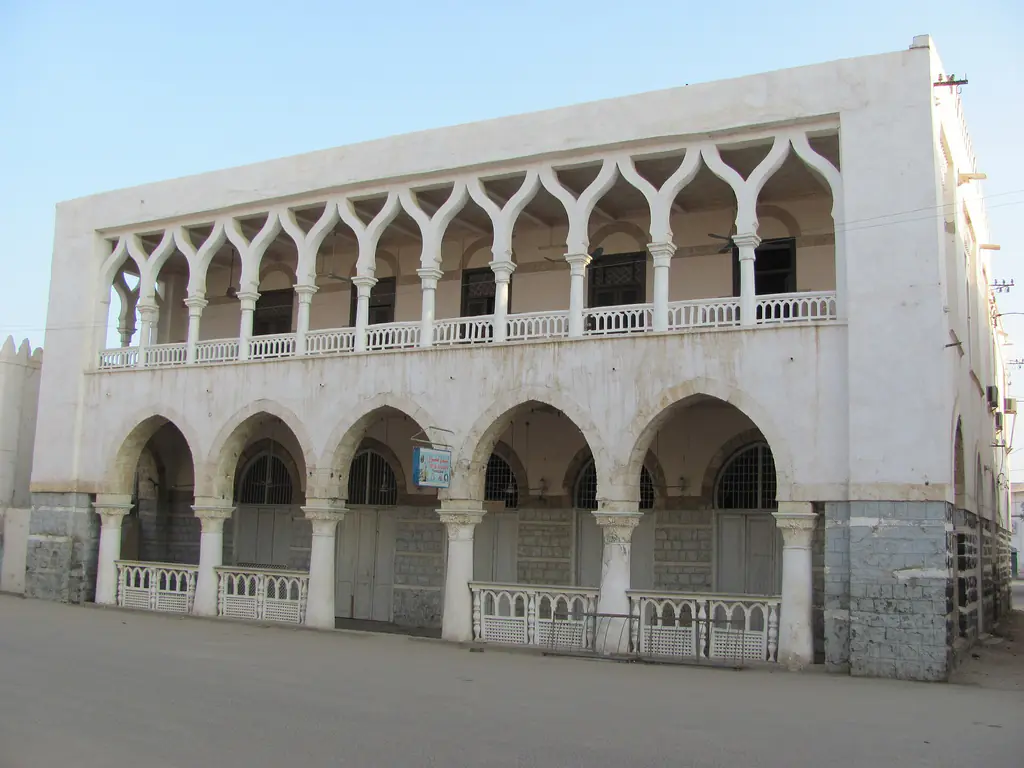
A whitewashed two-storey house in Massawa's old town with a row of pointed arches along its upper balcony
El-Safi House in the old town. Photo: Reinhard Dietrich, CC0, via Wikimedia Commons.
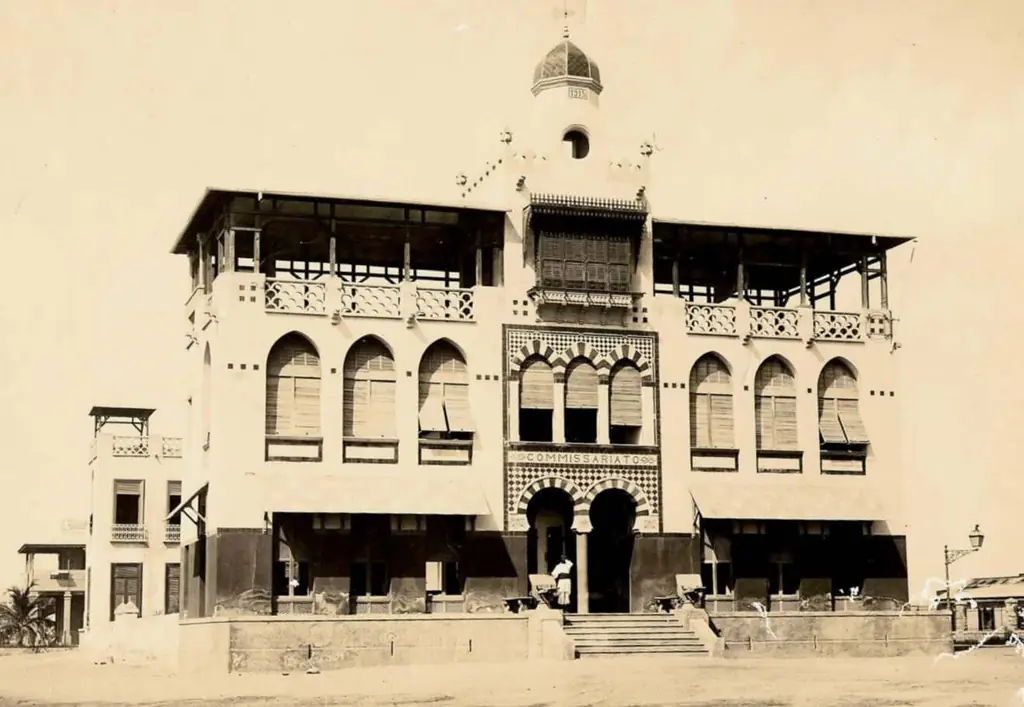
The commissariat building in Massawa in 1918, with pointed arches, wooden balconies and a small dome
The same arches and balconies in 1918. Public domain, via Wikimedia Commons.
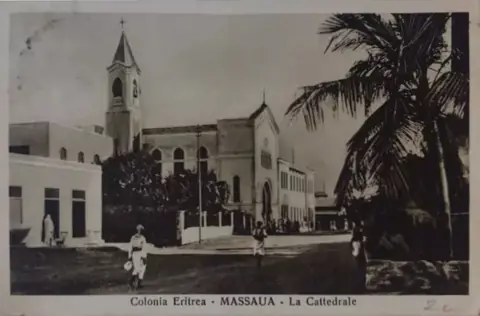
An old postcard of the cathedral at Massawa, a white church with a bell tower, from the Italian years
The cathedral, on a postcard from the Italian years. Public domain, via Wikimedia Commons.

The road up

Asmara, on the plateau

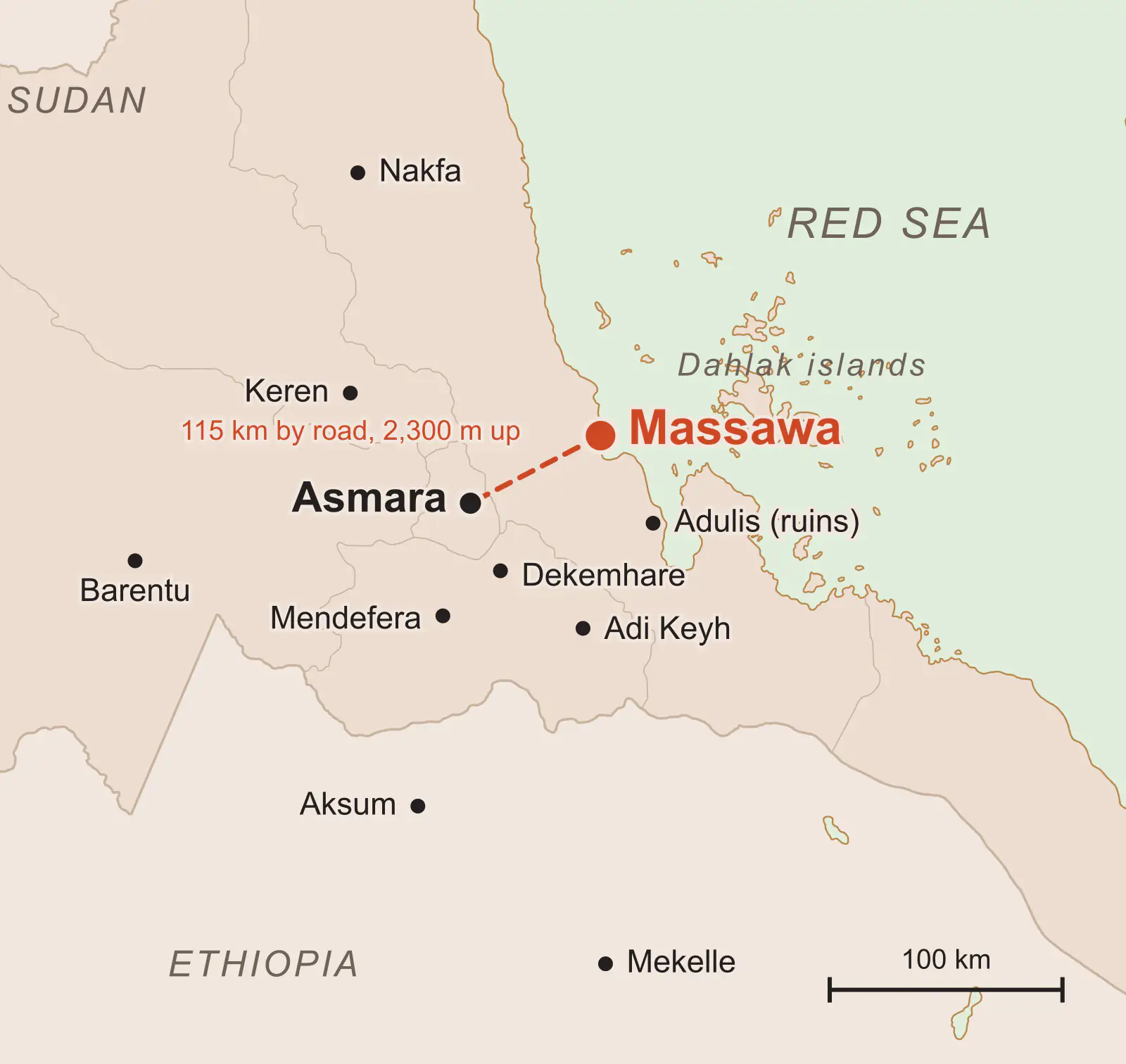
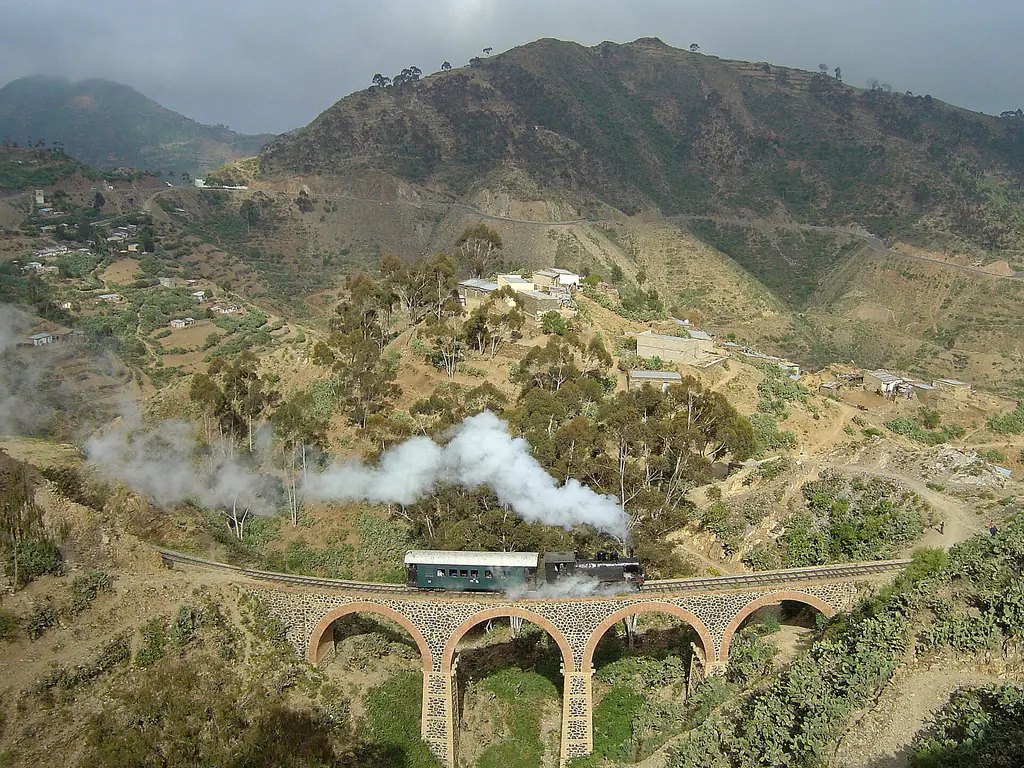
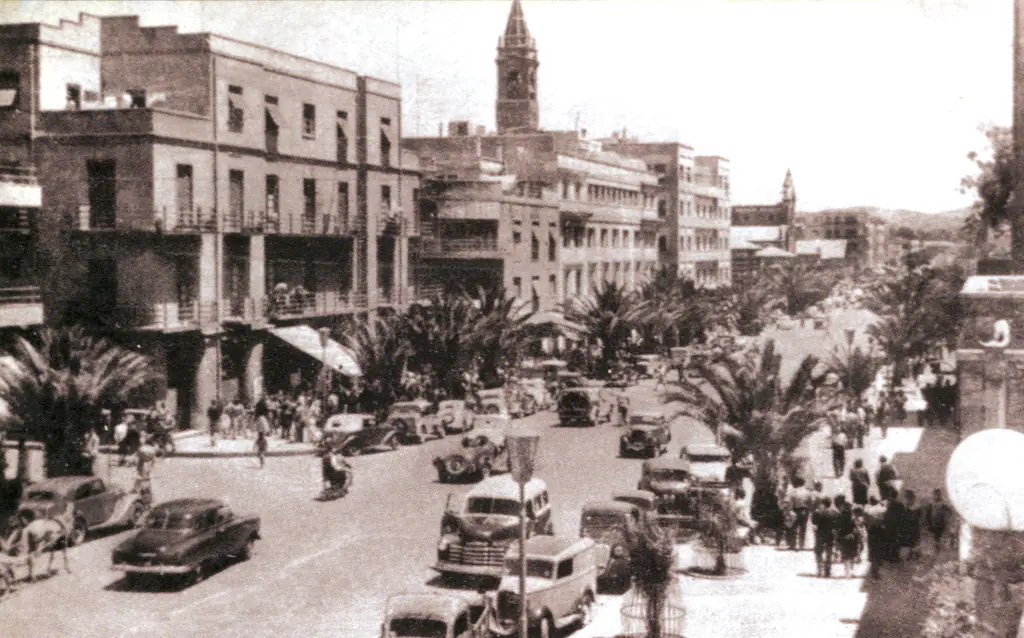
Behind the coast the land climbs. A hundred and fifteen kilometres of hairpins and a narrow-gauge railway take you from the sea to Asmara, the capital, more than two kilometres up, where the air is thin and cool and the weather is Melbourne's without the seasons. The Italians laid out the centre in the 1930s and nobody knocked it down, so in the evening people walk the palm-lined avenue past the cinemas and the cafés and drink a macchiato standing up. The Catholic cathedral, the great mosque, the Orthodox cathedral and the synagogue are a few minutes' walk from one another.

Up there nothing hurries. The tsebhi simmers for hours and the injera takes its time to rise. Down on the coast, in that heat, you cook fast and eat after dark, fish off the boat and kulwha flashed in a pan. The platter here has both.

Map of central Eritrea with Massawa on the coast, Asmara on the plateau, the road between them, and Keren, Nakfa, Barentu, Mendefera, Dekemhare, Adi Keyh, Adulis and the Dahlak islands marked, with Aksum and Mekelle across the border
Massawa, Asmara and the towns between the sea and the border. Map: NordNordWest, CC BY-SA 3.0, via Wikimedia Commons, recoloured and labelled.
A small steam train crossing a stone viaduct on the mountain railway between Massawa and Asmara, with terraced hills behind
The railway on its way up from the coast. Public domain, via Wikimedia Commons.
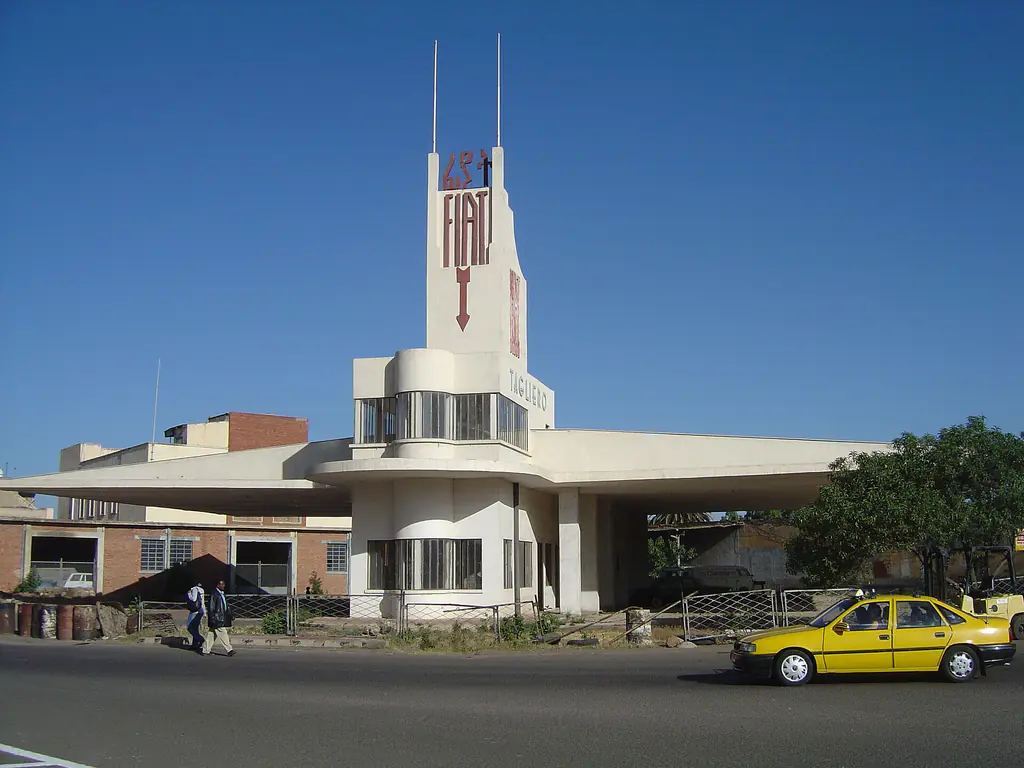
The Fiat Tagliero petrol station in Asmara, with two long concrete wings cantilevered out like an aeroplane
The Fiat Tagliero, an art deco petrol station with wings. Public domain, via Wikimedia Commons.
Harnet Avenue in Asmara in the 1930s, palm trees down the middle, cars and buses, and the cathedral tower behind
The palm-lined avenue in the 1930s. People walk it every evening. Public domain, via Wikimedia Commons.
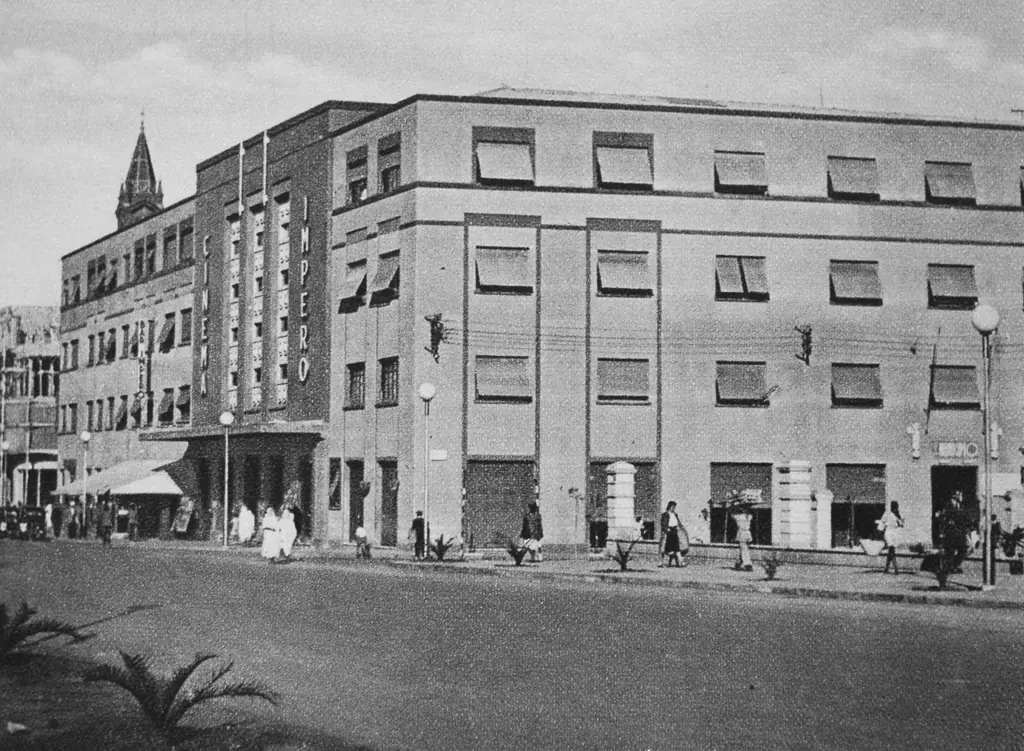
Cinema Impero in Asmara soon after it opened in the 1930s, a tall art deco front with its name in vertical letters
Cinema Impero, new, in the 1930s. Public domain, via Wikimedia Commons.
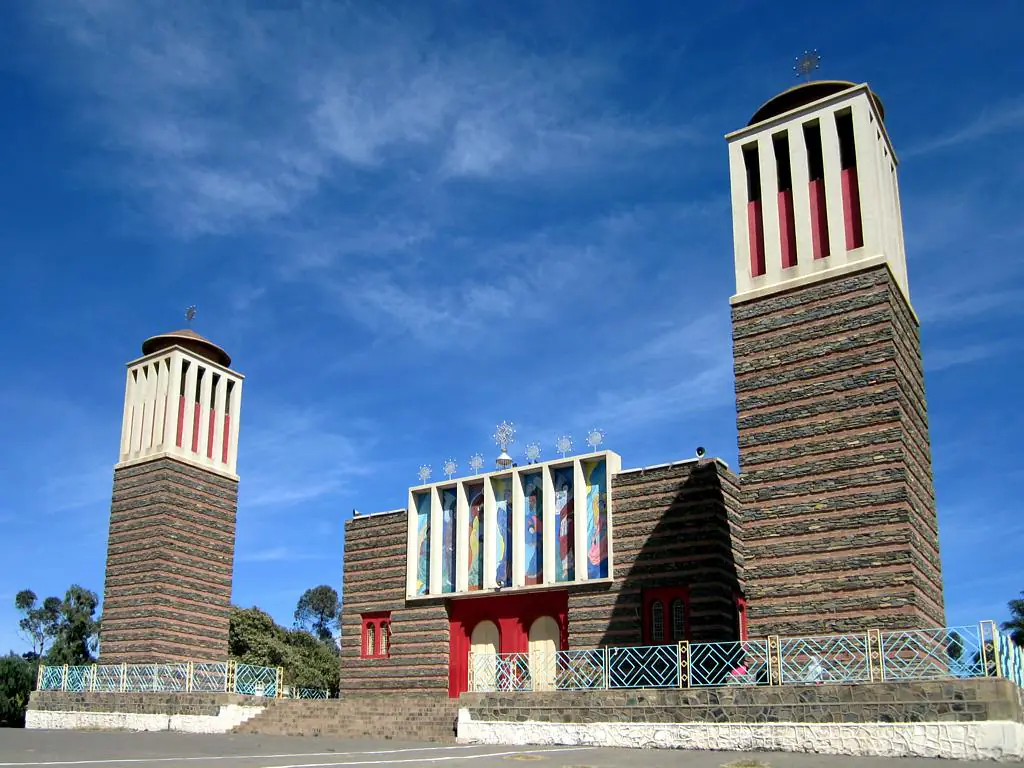
Enda Mariam Orthodox Cathedral in Asmara, a wide stone front with a tall bell tower and mosaic panels, under a blue sky
Enda Mariam, the Orthodox cathedral. Photo: David Stanley, CC BY 2.0, via Wikimedia Commons.
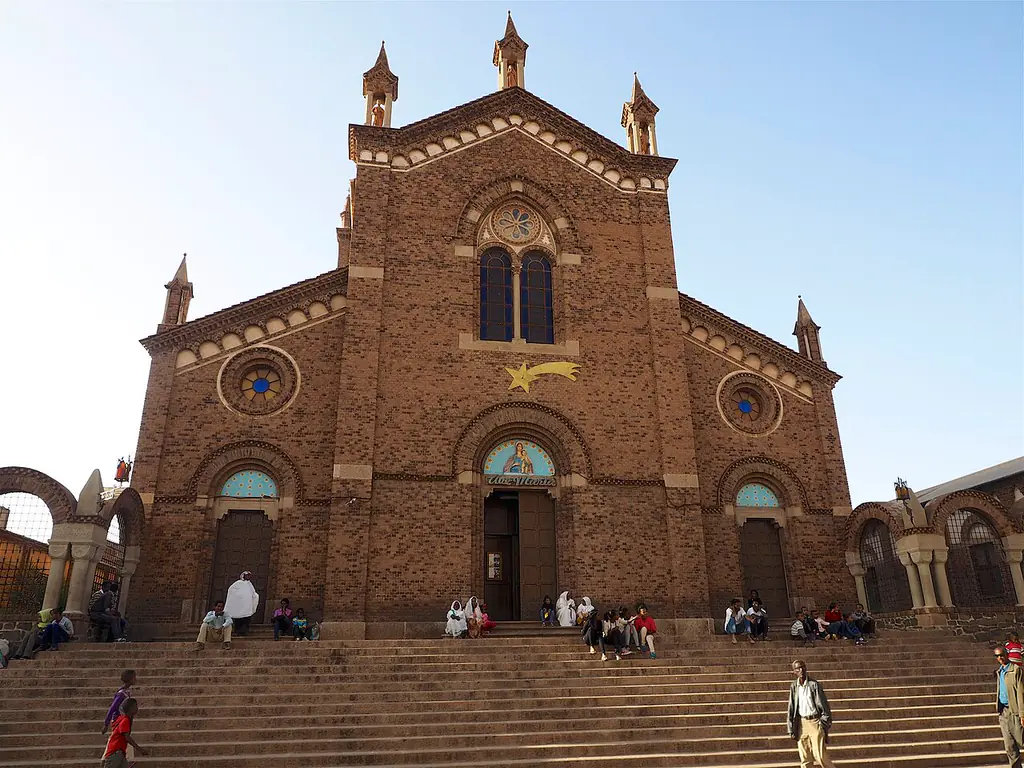
St Joseph's Catholic Cathedral in Asmara, red brick with a tall Lombard bell tower, seen down the avenue
St Joseph's, the Catholic cathedral on the avenue. Photo: Clay Gilliland, CC BY-SA 2.0, via Wikimedia Commons.
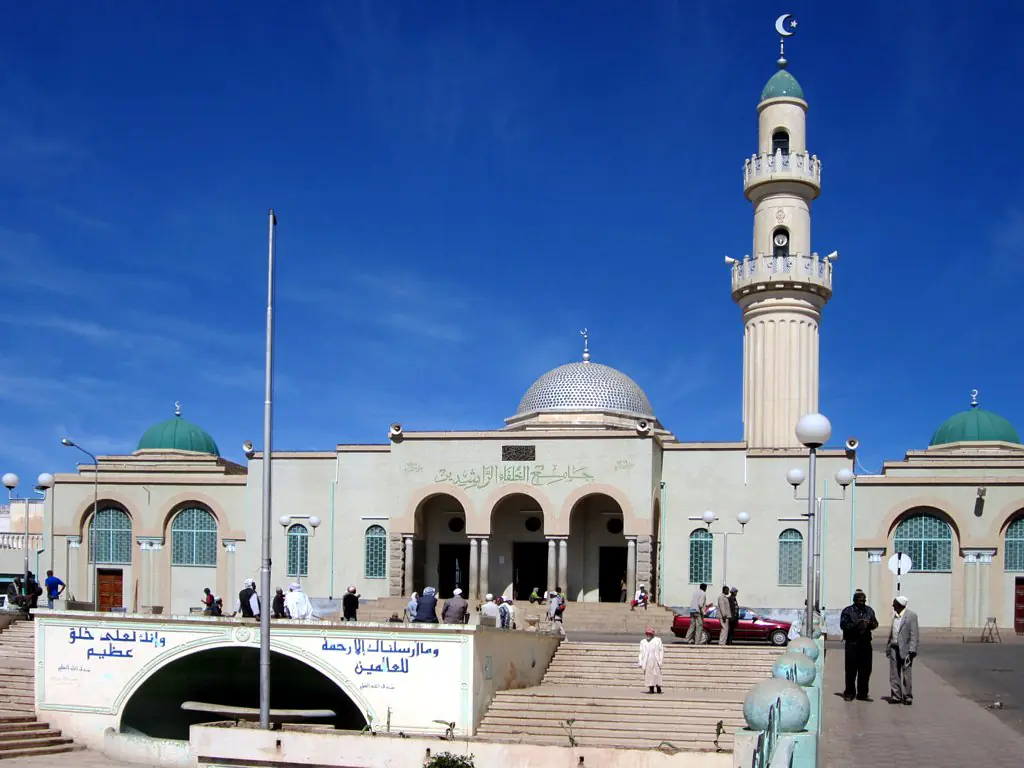
The Great Mosque of Asmara, a pale stone front with a tall minaret, in bright sun
The Great Mosque, a few minutes' walk from both. Photo: David Stanley, CC BY 2.0, via Wikimedia Commons.

Celebrations

Music, dress and dancing

The music in the restaurant is African, and jazzy without being jazz. Some of it is the old Addis Ababa big-band sound of the 1960s and 70s, horns and organ and a swinging drummer, and more of it is what everyone at home grew up on in the 80s and 90s, a singer out front with a keyboard and a horn section behind: Mahmoud Ahmed, Aster Aweke, Neway Debebe. Either way the tunes sit in the five-note scales the krar and the wata have always used. Those scales are older than any of it. The Orthodox church has sung in modes of its own since Saint Yared wrote them down in Aksum in the 500s, with a way of notating them that is still taught, and the four scales that carry nearly every Ethiopian song, tizita, the one for longing, among them, grew out of that chant. They are the same family of scales that became the blues on the other side of the Atlantic, so the music sounds like a cousin of jazz.

The rest comes from further across the continent, and if one song is playing on your first visit it is probably Habib Koité from Mali singing "Cigarette A Bana". It is slow, warm and slightly melancholy, and it goes with the food the way the coffee does.

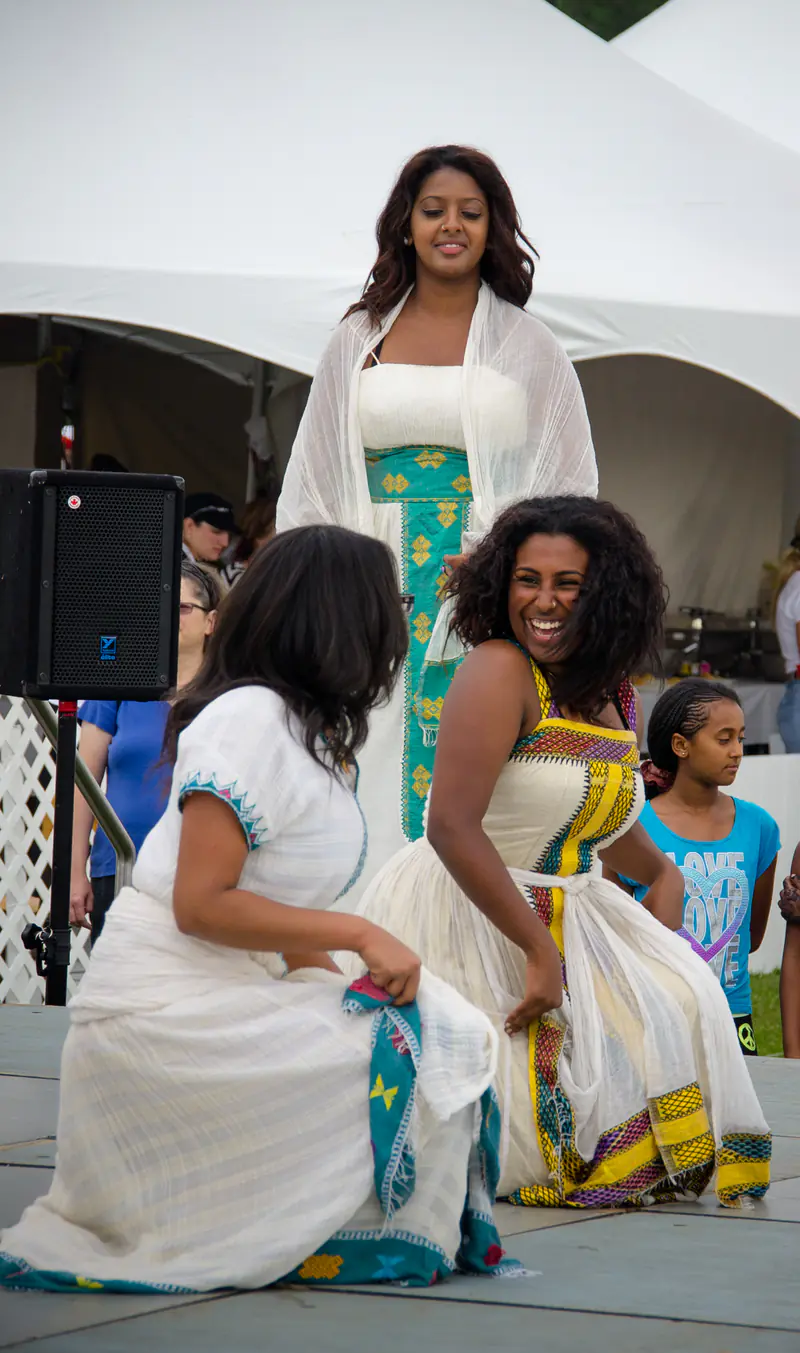
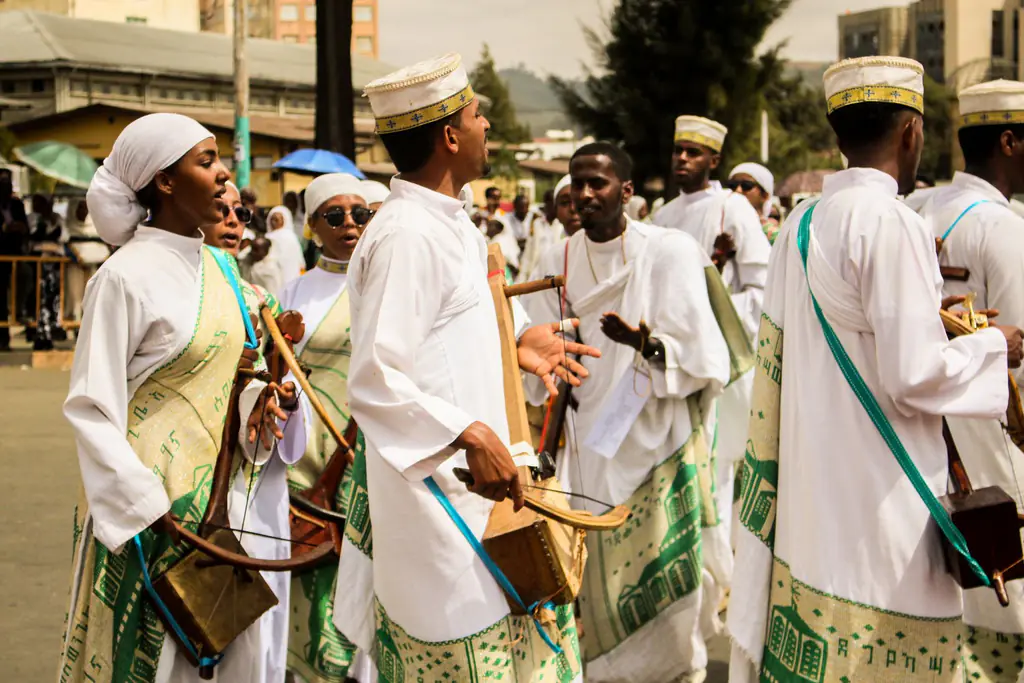
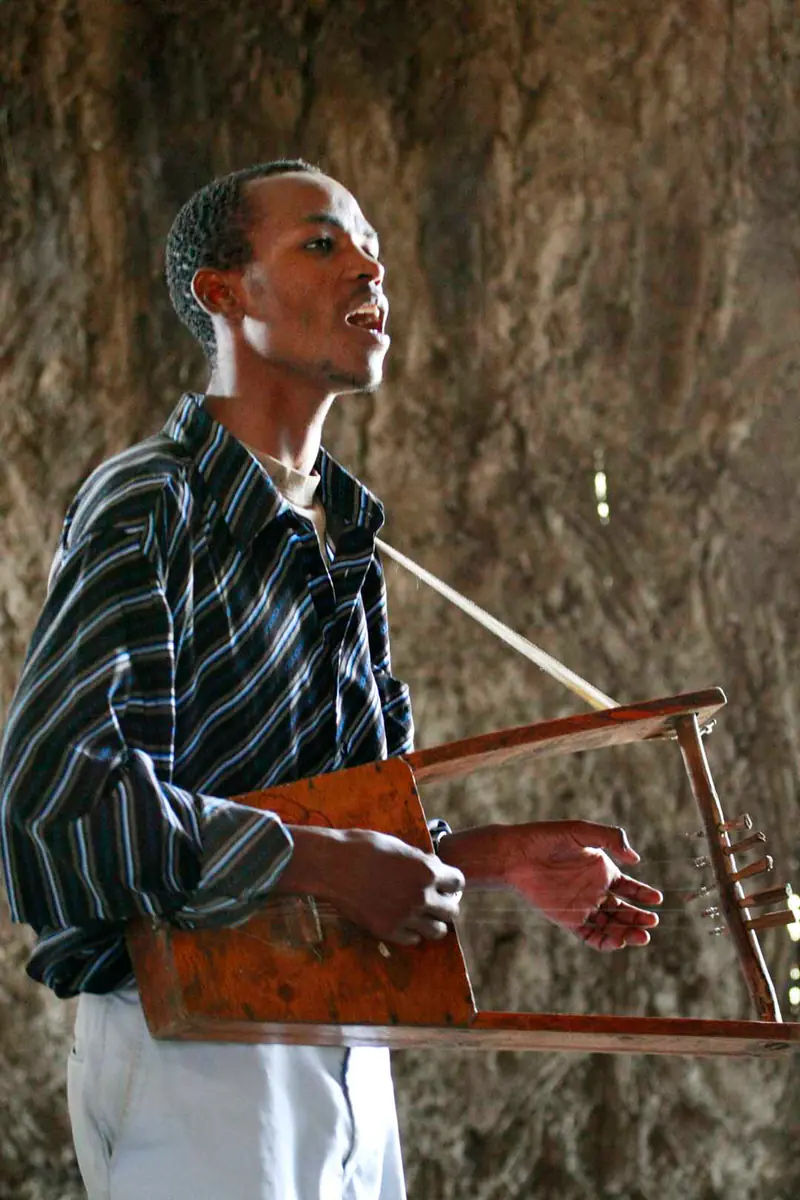
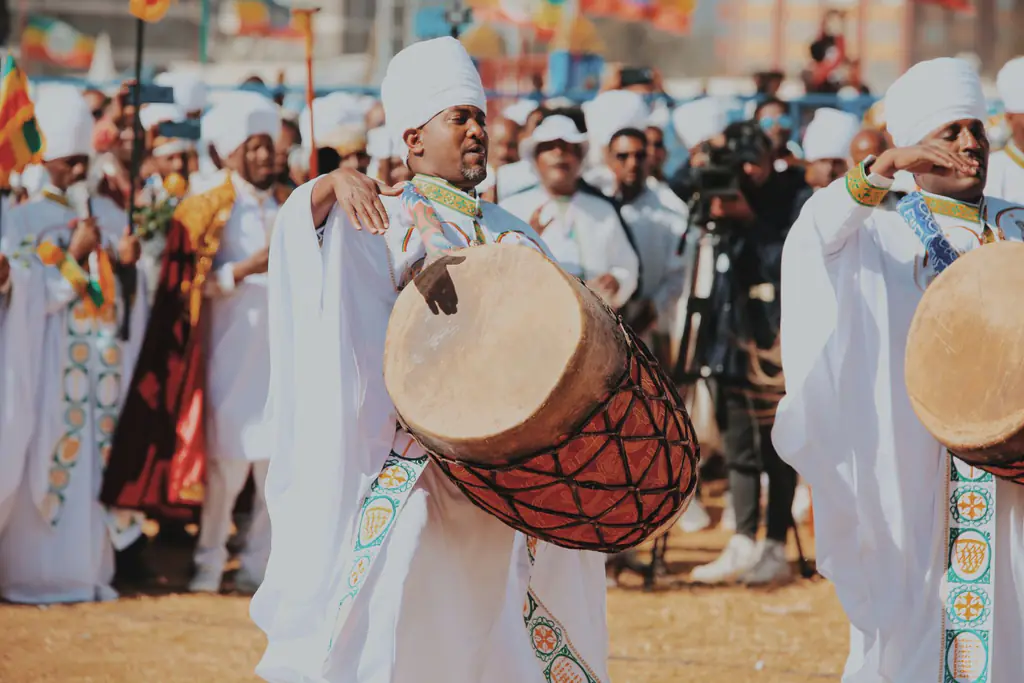
At weddings and holidays the women wear a zuria, a long white cotton dress with a woven border in bright colours, and a light shawl called a netsela, and the men wear white cotton with a netsela over the shoulders. The music comes from the krar, a five- or six-string lyre, and the wata, a one-string fiddle played with a bow, with the kebero drum underneath. Guayla goes round in a slow circle with the shoulders doing the work, the Amhara eskista across the border is faster and puts even more of the work on the shoulders, and either way you will be fed before anyone lets you dance.

A smiling young woman in a white cotton dress with a bright embroidered border down the front, green beaded earrings and traditional facial markings, on a rooftop at golden hour
The white dress, with its woven border. Photo: Fasika Get, Pexels.
Three young women in white dresses with coloured borders dancing at an Eritrean community festival, one laughing
Guayla at a community festival. Photo: Kurt Bauschardt, CC BY-SA 2.0, via Wikimedia Commons.
A line of musicians in white robes and embroidered sashes playing the one-string masenqo with bows at a Meskel procession
One-string fiddles at a Meskel procession. Photo: Lan Yao, Pexels.
A young man singing as he plays a wooden six-string krar
The krar. Photo: Steve Evans, CC BY 2.0, via Wikimedia Commons.
A drummer in white robes and a white turban playing a large kebero drum slung at his hip, in a crowd at a festival
And a lot of drum underneath. Photo: Abuti Engidashet, Pexels.

Come and taste where it comes from

Monday to Saturday, 5:30pm until 10pm. Closed Sundays.

Menu Book a table